
Causes of Pain in Elbow Joints: What Doctors Commonly Diagnose


Elbow pain is often underestimated until it begins interfering with daily activities such as lifting, gripping, typing, or even holding a cup. Because the elbow sits at the center of upper-limb function, pain here can quickly limit work, sport, and basic self-care.
Yet elbow joint pain does not come from a single structure. Tendons, cartilage, ligaments, bone, and nerves all pass through a compact anatomical space, meaning different conditions can feel surprisingly similar at first. Understanding the causes of pain in elbow joints helps explain why correct diagnosis is essential for lasting relief rather than temporary symptom control.
Many people initially assume elbow pain is simply “strain” and try to rest through it. While mild overload can settle, persistent or recurring pain often signals underlying tissue changes that need targeted care. Orthopaedic specialists focus on identifying which structure is responsible, because effective treatment depends entirely on the true source of the pain. A clinical overview of modern elbow assessment pathways can be found in dedicated orthopaedic elbow care resources that outline how specialists evaluate joint, tendon, and nerve disorders together rather than in isolation.
How the Elbow Joint Works
The elbow is a hinge joint formed by three bones: the humerus in the upper arm and the radius and ulna in the forearm. Together, they allow bending, straightening, and rotation of the forearm. Stability comes from a combination of bony architecture, strong ligaments, and balanced muscle control. Tendons attach powerful forearm muscles to the joint, enabling gripping, lifting, and fine motor tasks.
Because so many tissues converge in a small area, even minor disruption in one structure can affect the entire joint. A swollen tendon can irritate a nearby nerve. Ligament laxity can increase joint friction. Cartilage wear can alter load transfer through tendons. This interdependence explains why elbow pain is sometimes difficult to localize without clinical testing.
The elbow is also a high-load joint. Every time you carry a bag, push open a door, type on a keyboard, or lift weights, force travels through the elbow. Repetition without adequate recovery increases the likelihood of tissue breakdown over time.
Common Causes of Elbow Joint Pain
Tendon Overuse Injuries
The most frequent source of elbow pain comes from tendon overload. Repetitive gripping, wrist extension, or lifting strains tendon attachment sites. Over time, microscopic tendon degeneration develops, reducing tissue resilience. Tennis elbow (outer elbow) and golfer’s elbow (inner elbow) fall into this category. Pain often appears during activity and eases with rest, only to return when load resumes.
Tendon degeneration is not simple inflammation. The collagen structure weakens, blood supply decreases, and pain sensitivity increases. That is why treatment focuses on restoring tendon health rather than only reducing pain.
Joint Cartilage Wear
Cartilage covers joint surfaces to allow smooth motion. When cartilage thins or becomes irregular, friction increases inside the joint. This can cause aching pain, stiffness, and sometimes grinding sensations. Cartilage wear may result from age-related degeneration, previous fractures, or repetitive heavy loading.
Although elbow arthritis is less common than knee or hip arthritis, it can significantly affect function when present. Early detection helps slow progression and preserve joint motion.
Ligament Injuries
Ligaments hold the elbow joint stable during movement and load transfer. Sudden trauma, throwing sports, or repetitive strain can stretch or tear these stabilizers. When ligament integrity is reduced, abnormal joint movement occurs, leading to pain, weakness, or a sense of instability during lifting or pushing.
Ligament-related elbow pain often worsens with specific directional loads rather than general motion, which helps clinicians distinguish it from tendon or cartilage disorders.
Nerve Compression
Several major nerves pass directly behind and alongside the elbow joint. Swelling, scar tissue, tendon thickening, or prolonged bent-elbow positions can compress these nerves. Nerve compression produces pain combined with tingling, numbness, or weakness extending into the forearm and hand.
Cubital tunnel syndrome, involving ulnar nerve compression, is a classic example. Because nerve pain behaves differently from joint or tendon pain, recognizing these patterns is key to correct diagnosis.
A general clinical reference on elbow pain causes outlines how musculoskeletal and nerve conditions overlap in symptom presentation and why structured examination is necessary to separate them.
Symptoms That Help Narrow the Cause
The location and behavior of pain offer valuable diagnostic clues. Pain on the outer elbow during gripping usually indicates extensor tendon involvement. Inner elbow pain often reflects flexor tendon strain or ulnar nerve irritation. Deep joint pain with stiffness suggests cartilage wear or early arthritis. Sharp pain during specific movements may signal ligament strain or instability.
Other helpful indicators include night pain, swelling, loss of grip strength, or numbness in the fingers. Understanding these patterns allows doctors to focus examination and imaging efficiently, avoiding unnecessary investigations.
Patients who describe exactly when pain appears — lifting, twisting, pushing, or resting — provide essential information that guides diagnostic direction.
Diagnostic Approach in an Orthopaedic Clinic
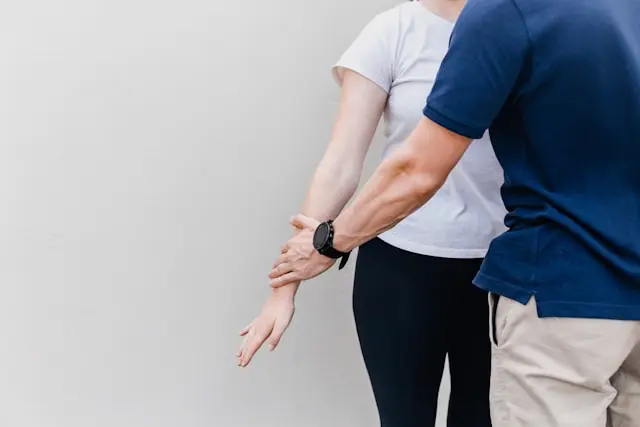
Assessment begins with a detailed history of activity patterns, symptom duration, and aggravating movements. Physical examination then evaluates joint range of motion, tenderness points, tendon load tests, ligament stability, and nerve sensitivity. These tests help isolate which structure reproduces symptoms.
Imaging follows when needed. X-rays identify fractures, bone alignment, and arthritis. Ultrasound visualizes tendon structure and motion. MRI provides detailed views of ligaments, cartilage, and nerve surroundings. Imaging is chosen selectively based on examination findings rather than used as a first step.
This layered diagnostic approach ensures treatment targets the real cause of elbow pain rather than simply suppressing symptoms.
Treatment Options by Diagnosis
Non-surgical care is effective for most elbow pain conditions. Tendon disorders respond to guided loading rehabilitation, activity modification, and sometimes shockwave or biologic therapies. Cartilage wear is managed with load adjustment, physiotherapy, and injection therapies where appropriate. Ligament sprains may require bracing and stability-focused strengthening programs. Nerve compression is treated with posture correction, activity changes, and in persistent cases surgical nerve release.
Surgery is reserved for structural problems that fail conservative management, such as advanced arthritis, unstable ligament injuries, persistent nerve compression, or refractory tendon degeneration. When surgery is required, modern techniques aim to restore anatomy while allowing early rehabilitation to preserve motion.
Matching treatment precisely to diagnosis remains the foundation of lasting relief.
Preventing Recurring Elbow Joint Pain
Long-term elbow health depends on balanced load management. Gradual workload progression, regular breaks during repetitive tasks, optimized workstation posture, proper lifting technique, and maintaining forearm and shoulder strength all protect the elbow from repeated breakdown.
Early attention to mild symptoms prevents small tissue irritation from developing into degenerative conditions. Education, awareness, and guided strengthening programs significantly reduce recurrence risk once pain resolves.
Conclusion
Elbow joint pain arises from multiple possible sources — tendons, cartilage, ligaments, bone, or nerves — each requiring a distinct treatment strategy. Because symptoms often overlap, structured clinical assessment and selective imaging are essential for identifying the true cause.
With accurate diagnosis, targeted therapy, and appropriate load management, most elbow joint pain conditions improve without long-term limitation. Early expert input ensures recovery stays on track and preserves comfortable, confident arm function for everyday life.


